🔧 Should I sell my home or rent it out?

🏠 The Crossroads
Deciding whether to sell your current home or keep it as a rental property is a major financial crossroads. This tool compares your ending wealth under both paths.
We will look at your home's appreciation, rental cash flow, and market investment returns over your chosen time horizon to see which strategy comes out ahead.
📈 Renting & Appreciation
Renting out your old home often wins when you have a strong rent-to-price ratio, a low remaining mortgage rate, or live in a rapidly appreciating market. Keeping the property allows you to build equity while tenants pay down your debt.
Per the IRS (Topic no. 415), landlords can deduct operating expenses including mortgage interest, real estate taxes, maintenance, utilities, and depreciation against rental income. These deductions can significantly offset your tax burden while renting.
🤝 Selling & Investing
Selling your home today is usually the better move if rental cash flow is thin, or if you simply have no appetite for landlording. Cashing out allows you to deploy your equity into index funds or other investments immediately.
Watch your tax timeline. The IRS (Topic no. 701) requires you to have lived in the home for 24 of the past 60 months to claim the capital gains exclusion. Renting it out for more than three years can forfeit this massive tax break.
📝 Behind the Math
To keep this comparison focused on the major wealth drivers, this tool uses a few stated simplifications. We exclude detailed mortgage amortization, assuming a fixed principal balance for the horizon.
We also simplify away depreciation recapture, taxes on your annual rental income, and future rent growth. Selling costs are fixed at 7% for both paths to account for standard agent commissions and closing fees.
🔗 See Also
For further related reading, check out:
📊 Results
Annual Cash Flow
Sell Path Wealth
Rent Path Wealth
Recommendation
Rent it out
Net Advantage
Calculator updated by heyfinfam (v26.7.1) · View history
Privacy: None of your data is transmitted to the author of this view or any other third parties. Financial inputs are never used to identify you; they're only used to calculate results.
Disclaimer: This content and any calculations provided are for informational purposes only. The views, calculations, and methodologies expressed are those of the author and do not necessarily reflect those of this platform. Not financial advice. Users are solely responsible for any decisions made based on this information.
See more views
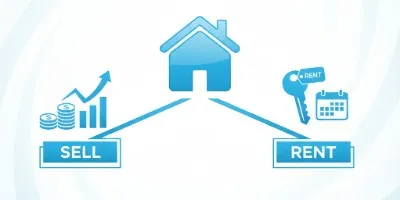
Determine the benefits of renting versus selling your property, accounting for expenses, taxes, and investment opportunities.

Compare the returns of keeping a low-yield rental property versus liquidating equity to invest in the stock market or high-yield accounts.

Determine if refinancing your mortgage to lower interest payments is better than investing the difference, considering closing costs and payoff.